
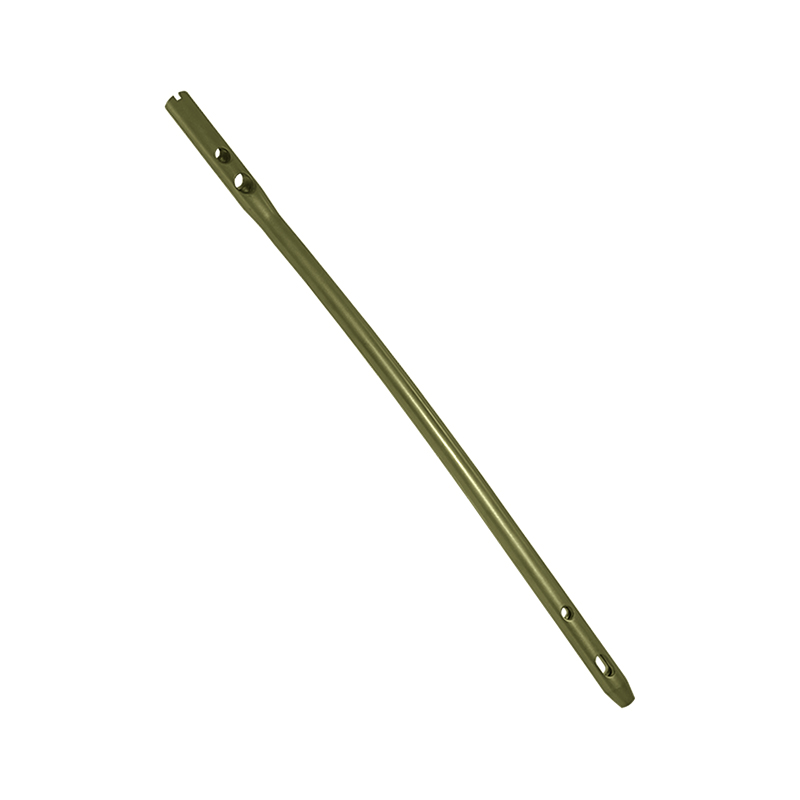
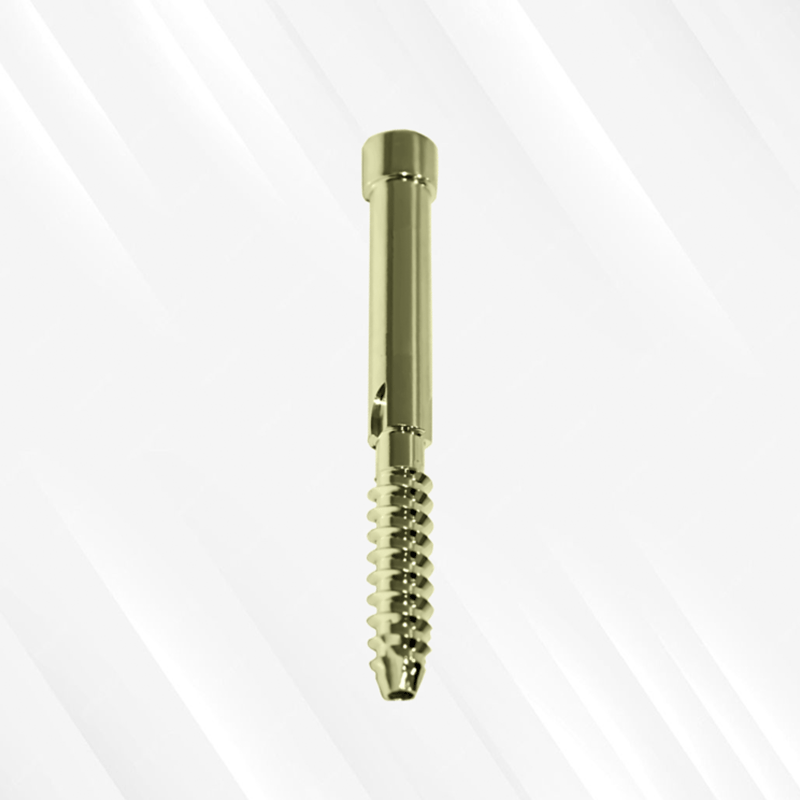
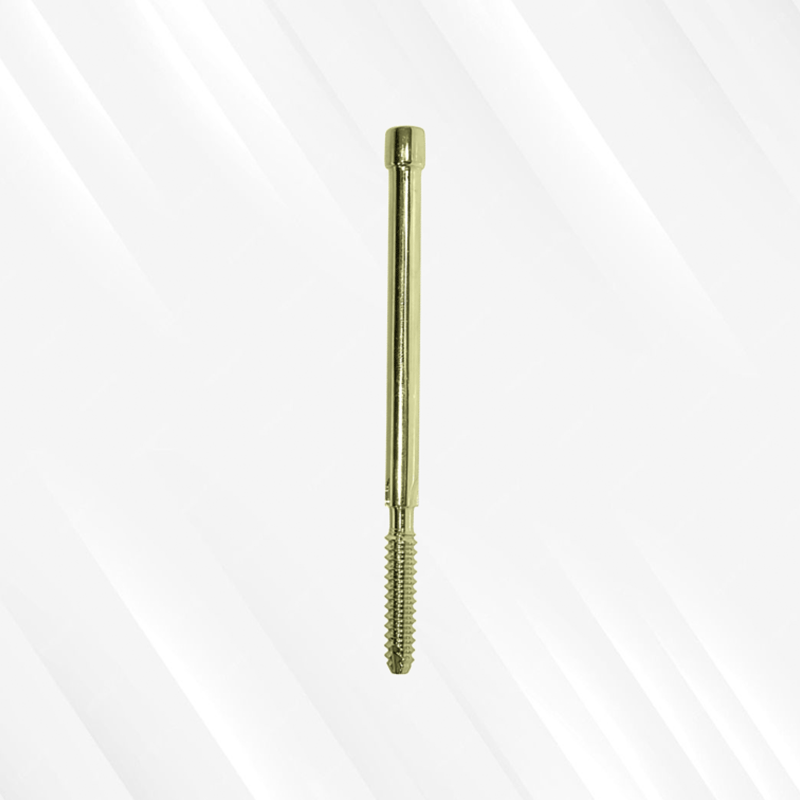
| Specification | Details |
|---|---|
| Length | 340, 360, 380, 400, 420, 440 mm |
| Type | SS (Stainless Steel) / TT (Titanium) |
| Diameter (Ø) | 9.0, 10.0, 11.0, 12.0 mm |
| Angle | 130°, Left / Right |
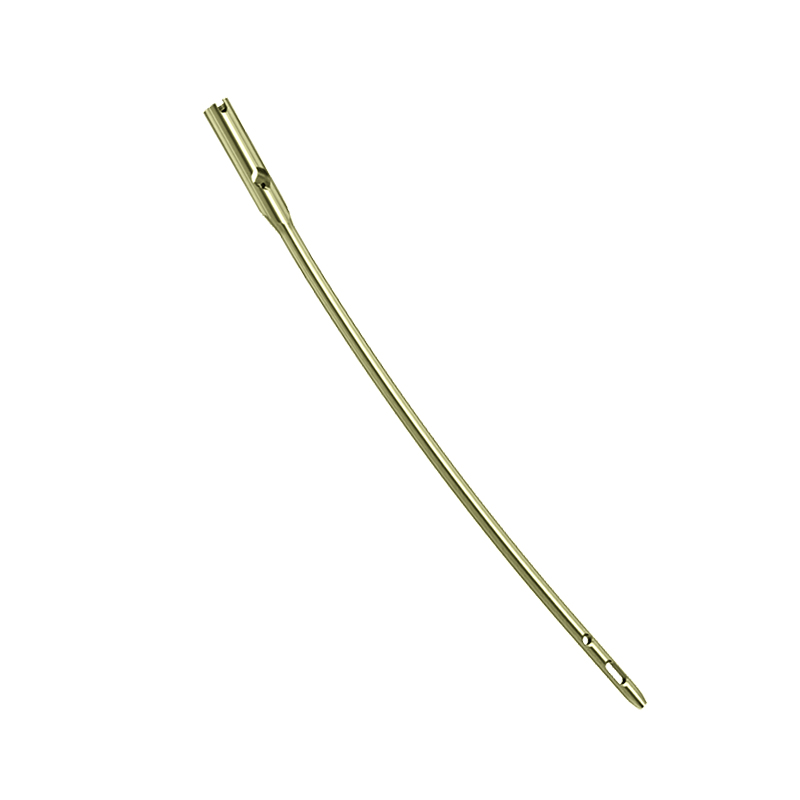
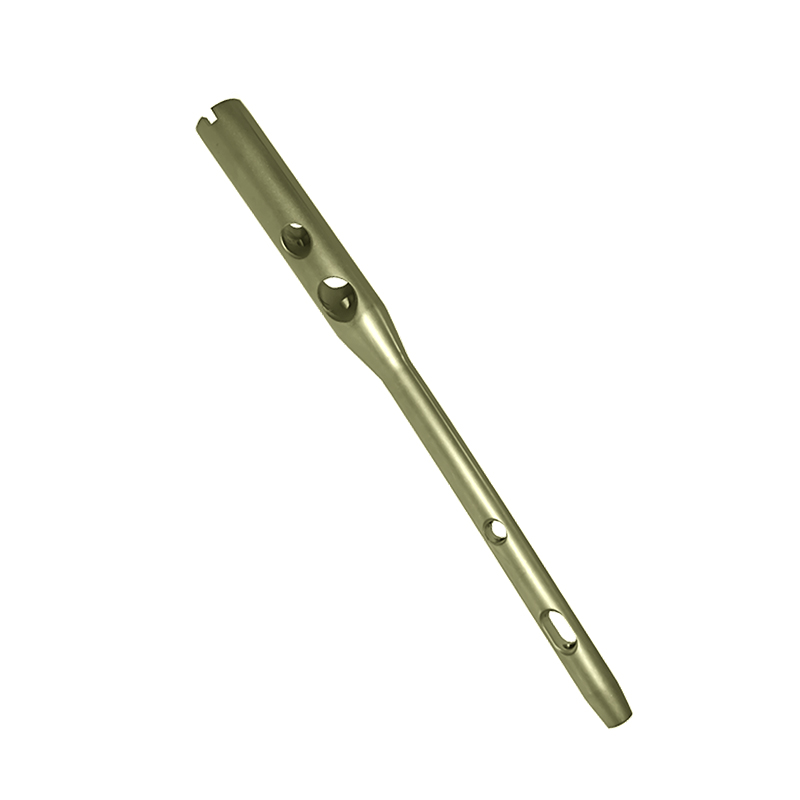
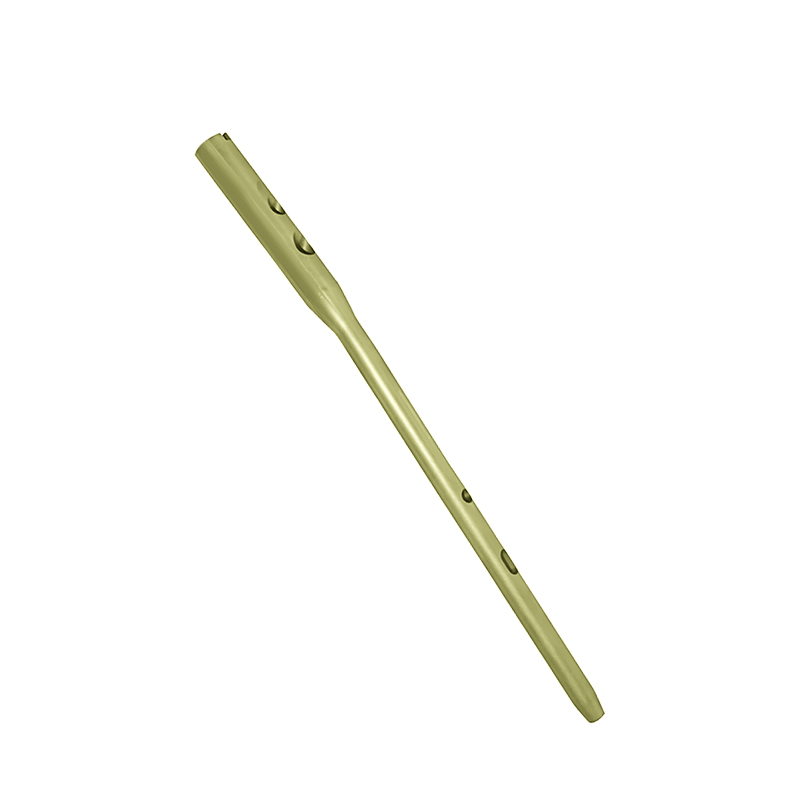
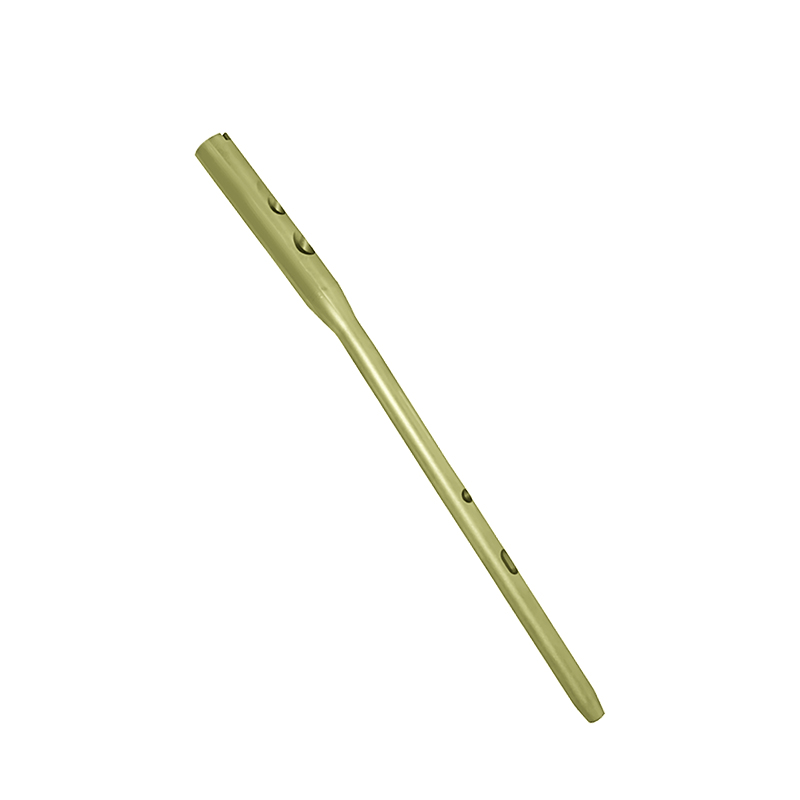
| Design | Antirotation – II Cannulated Long Proximal Femur Nail for Intramedullary Fixation |
The 130° Long Proximal Femur Nail Antirotation – II Cannulated is a specialized intramedullary implant designed for stable fixation of proximal femur fractures. Available in lengths from 340 mm to 440 mm and diameters from 9.0 mm to 12.0 mm, it provides secure, minimally invasive stabilization with left and right angled options. Made from stainless steel (SS) or titanium (TT), it ensures durable, biocompatible fracture support and reduces the risk of rotational instability.
The 130° Long Proximal Femur Nail Antirotation – II Cannulated is an advanced orthopedic device engineered for the treatment of proximal femur fractures, including intertrochanteric and subtrochanteric fractures. Its long intramedullary design allows for secure fixation across the femoral shaft, while the antirotation feature prevents rotational displacement of the femoral head during healing.
Available in lengths ranging from 340 mm to 440 mm and diameters from 9.0 mm to 12.0 mm, this nail accommodates a wide range of patient anatomies. The 130° angled configuration, available in both left and right versions, ensures proper alignment of the femoral neck and shaft, improving functional outcomes and minimizing malunion risks.

This will close in 21 seconds
Got questions? Ideas? Fill out the form below & our specialist will contact you.
Need help? Our team is just a message away